There are election results that shift momentum, and then there are those that snap old political habits. The 2026 state verdict clearly falls in the latter category. This is not anti-incumbency playing out in familiar cycles. This is voters stepping out of long-held political arrangements and choosing something entirely different. The message is sharper than usual: performance matters, but so does freshness, and legacy alone is no longer enough to hold ground.
If you look at the numbers, the scale of the churn becomes clearer. In Tamil Nadu’s 234-member Assembly, TVK has surged past the halfway mark with a three-digit tally, pushing the DMK well below its previous strength and leaving the AIADMK further diminished; the BJP remains on the margins with a token presence. In Kerala’s 140 seats, the Congress-led front has crossed the majority mark comfortably, while the Left has slipped to one of its weakest tallies in years. In West Bengal, the BJP has moved from challenger to pole position, crossing the majority line in the 294-seat House and displacing the incumbent. In Assam, the BJP has retained power with a stable majority in the 126-member Assembly, reinforcing its hold in the Northeast. Put together, these numbers show not just wins and losses, but a clear pattern — expansion for the BJP, recovery without dominance for Congress, and a sharp contraction for the Left, with Tamil Nadu standing out as a complete political reset.
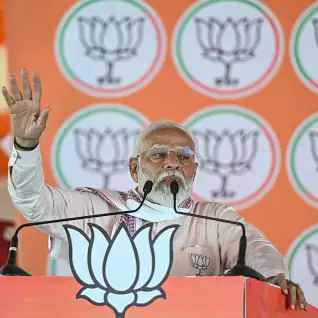
Start with the BJP. On the face of it, this is another strong election for the party. It continues to widen its footprint, adding new territories and reinforcing its hold over existing ones. The ability of the BJP to convert national leadership into state-level victories remains unmatched. It has built a political machine that travels well across regions, languages and caste equations. That is not easy in a country like India. But this verdict also exposes a familiar limitation. The party’s inability to make a decisive breakthrough in the deep South continues to stand out. Tamil Nadu, in particular, remains resistant. Years of effort, leadership projection and alliance building have not translated into meaningful electoral presence. This matters because it shows that even at its peak, the BJP’s expansion has cultural and political limits. It can dominate large parts of India, but it cannot assume uniform acceptance everywhere.
For the Congress, the result offers relief, but not redemption. There is enough here for the party to argue that it is still in the game. It has managed to win where it needed to, stay relevant where it risked fading, and most importantly, show that it can still defeat entrenched rivals in direct contests. That is no small thing given the narrative that had built up around its decline. But the problem for Congress is that survival is being mistaken for revival. The party is still not setting the terms of the political debate. It is still reacting more than leading. In states where space has opened up, it has not been the primary beneficiary. That should worry it. Because elections like this are not just about seats won, but about who occupies the imagination of the voter. On that count, Congress is still not there. It looks steadier than before, but not stronger in a way that can challenge the BJP nationally on its own terms.
The Left, on the other hand, faces a far harsher reality. This election underlines a steady decline that has been visible for some time. The ideological pitch that once defined its politics is no longer connecting with a voter base that is far more aspirational and less anchored in class narratives. Organisationally too, the party looks dated, unable to match the agility of newer political formations or the scale of national parties. Losing ground in its traditional strongholds is not just an electoral setback, it raises fundamental questions about relevance. The Left is no longer shaping outcomes; it is adjusting to them. And unless there is a serious rethink, it risks slipping further into the margins.
But all of this — BJP’s expansion, Congress’s cautious recovery, Left’s decline — fades when you look at Tamil Nadu. That is where the real story of this election lies. For decades, the state has been defined by a stable, almost predictable political structure. Power alternated within a narrow band. Voters chose between familiar options, even when they were dissatisfied. That structure has now been broken. The rise of TVK is not just another electoral upset; it is a rejection of an entire political order. This is not a fragmented mandate or a protest vote scattered across parties. It is a clear, consolidated shift towards a new player that has managed to capture the mood of the electorate.
What makes this significant is not just the scale of the victory, but what it represents. Voters in Tamil Nadu have not just voted against incumbents, they have voted against continuity. They have chosen disruption over familiarity. That does not happen easily in a state with such a deeply rooted political culture. It suggests that dissatisfaction had been building for a while, and neither of the traditional players was able to address it convincingly. TVK stepped into that vacuum with a mix of personality appeal and political positioning that clicked at the right moment. Timing has been crucial, but so has the sense that this was an alternative, not just an add-on.
This has wider implications. It shows that even in states with strong regional identities and entrenched party systems, voters are willing to make dramatic shifts if they feel boxed in. It also signals that charisma, when combined with organisational clarity and a receptive electorate, can still overturn established equations. For other regional players across the country, Tamil Nadu becomes a case study in how quickly things can change when the ground is ready.
Taken together, the 2026 verdict tells us that Indian politics is entering a more fluid phase. National dominance does not guarantee state-level control. Historical legacy does not ensure continued relevance. Ideology without adaptation does not sustain support. And most importantly, voters are far less predictable than political parties assume. They are willing to experiment, to shift, and even to discard long-standing loyalties.
The BJP remains the most powerful political force in the country today, but it cannot ignore the gaps in its map. The Congress has bought itself time, but not yet a clear path to resurgence. The Left is searching for a role in a landscape that has moved on from its old anchors. And in Tamil Nadu, a new force has not just arrived, but taken charge, signalling that no political arrangement is permanent.
This is not a routine election cycle. It is a reminder that Indian democracy, for all its patterns, can still surprise. And when it does, it does so decisively.
Discover more from BizNewsWeek
Subscribe to get the latest posts sent to your email.