The Congress party’s inability to quickly settle the chief minister question in Kerala after a significant electoral victory is not merely another round of factional theatre. It is a revealing snapshot of the deeper organisational decay that has steadily weakened the party across India. What should have been a moment of authority and momentum instead became an embarrassing public display of lobbying, signalling, leaks and internal power games.
For a party that once ran India with remarkable political confidence, it was a deeply disappointing spectacle.
The issue is not about one individual becoming chief minister. Ambition in politics is natural. Senior leaders staking claim is normal in any democratic setup. The real issue is that the Congress increasingly appears incapable of taking decisions with speed, clarity and authority. Every important decision turns into a prolonged negotiation. Every leadership transition becomes a crisis. Every state unit behaves like a collection of competing camps waiting for Delhi to intervene.
This is precisely why the party increasingly looks unelectable to many voters.
People may forgive defeat. They may even tolerate ideological confusion. But voters rarely trust a party that appears organisationally weak and internally paralysed. Governance demands decisiveness. If a party struggles to decide its own leader after winning an election, why would citizens believe it can efficiently govern a state or the country?
Kerala matters enormously in this context because it remains one of the few major states where the Congress still possesses a meaningful political structure and realistic prospects of power. Unlike several northern states where the party has almost disappeared, Kerala still offers Congress a strong cadre network, leadership depth and electoral relevance.
Which is exactly why the recent confusion looked so damaging.
The power struggle involving leaders such as V D Satheesan, Ramesh Chennithala and the wider influence of figures like K C Venugopal once again exposed the chronic factionalism within the Kerala unit. At one level, such competition reflects internal democracy. But when it spills into prolonged uncertainty and public messaging wars, it projects weakness rather than vibrancy.
Even leaders who command public respect, such as Shashi Tharoor, often end up symbolising another unresolved contradiction within Congress — the gap between a modern, aspirational political image and an outdated organisational culture still dominated by camps and high-command calculations.
The larger problem is that the Congress still functions like a party unable to transition from its old command structure into a modern political organisation.
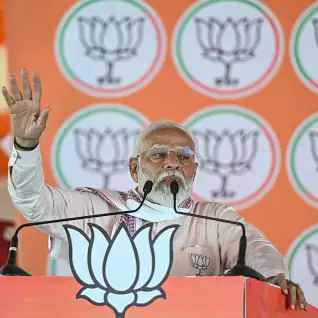
The contrast with the BJP is impossible to ignore.
The BJP may have intense internal rivalries of its own, but it projects discipline. Leadership decisions are generally swift and final. Whether one agrees with the BJP or not, voters see a machine that appears purposeful and organised. Congress, meanwhile, increasingly looks like a party trapped in endless consultation without conclusion.
Modern politics punishes that kind of indecision.
Today’s voters want leadership that appears prepared, energetic and in control. Congress frequently projects the exact opposite — hesitation, confusion and dependence on backroom negotiations. Even when it wins, it somehow manages to look unstable.
The Kerala episode also exposed the absence of a credible leadership pipeline within the party. Strong organisations prepare succession continuously. Younger leaders are groomed early. Disputes are settled internally before they become public embarrassments. Congress increasingly lacks these systems. Leadership questions become personalised battles instead of structured transitions.
The result is paralysis.
The party also continues to suffer from a culture of entitlement politics. Too many senior leaders still appear to believe positions must emerge through seniority, lobbying and factional bargaining rather than through organisational performance or electoral credibility. This creates the impression that internal power equations matter more than governance itself.
Ordinary voters notice this immediately.
The average citizen struggling with inflation, unemployment and rising living costs does not care about Congress factional arithmetic. People expect political parties to look focused on administration and governance. When leaders spend days fighting over posts after an electoral victory, it reinforces the impression that power matters more to them than public service.
That perception is politically disastrous.
Congress also faces a credibility problem because it often speaks one language publicly and practises another internally. In opposition, the party talks about democratic values, institutional integrity and constitutional morality. But within the organisation, leadership decisions frequently remain opaque and centralised. High-command culture still dominates. State leaders still wait endlessly for signals from Delhi.
This model may have worked decades ago when Congress dominated Indian politics nationally. It no longer works in a fragmented and highly competitive political environment.
Regional parties today are sharper, faster and more rooted in local political realities. The BJP operates with relentless organisational discipline and electoral precision. Congress finds itself squeezed between regional agility and BJP-style machinery politics.
That is why the Kerala chief ministerial confusion became symbolically important far beyond Kerala itself.
It reinforced a growing national perception that Congress is no longer a serious political machine. The party still possesses history, emotional goodwill and recognisable leaders. But modern elections are not won through nostalgia. They are won through organisation, clarity, messaging and execution.
Congress increasingly appears weak on all four fronts.
The tragedy is that India genuinely needs a strong opposition party. Democracy functions best when governments face credible competition and rigorous scrutiny. A weakened opposition ultimately weakens democratic accountability itself. Congress still has the footprint and national presence to play that role. But it repeatedly undermines itself through indecision and internal dysfunction.
Even Rahul Gandhi, despite rebuilding some personal political credibility over the last few years, has not fully resolved the deeper structural confusion within the organisation. The party still appears uncertain about who exercises authority, how decisions are made and what kind of leadership culture it wants to build.
The Kerala episode should have been an opportunity to project confidence and maturity. A swift and smooth leadership decision after victory could have signalled that Congress was rediscovering organisational coherence. Instead, the party once again looked trapped within its own contradictions.
And that is perhaps the saddest part.
Congress no longer looks like a party defeated only by its opponents. Increasingly, it looks like a party defeated by itself.
Discover more from BizNewsWeek
Subscribe to get the latest posts sent to your email.